

Official cover for “The Science of All Things — Curious Deductions Edition”, © Elementa Games. Source: the official article.
Combat gets the color circles, but the cases are the point: Silver Palace is a detective game first. The good news is that investigation has its own loop, and it is gentler than combat — a wrong guess costs nothing. This page walks the three beats of a case, the four field tools, and the branching Curious Deductions. The three-beat structure and branching-endings design are officially confirmed; tool behavior details are CBT2-observed from community guides.
The three beats of a case
- Field work. Walk the scene with your four tools and collect clues.
- The Evidence Board. Drag clues onto hypotheses; correct matches lock in, wrong ones bounce back.
- Interrogation. Take what the board proved into conversations, where answers open the next step of the case.
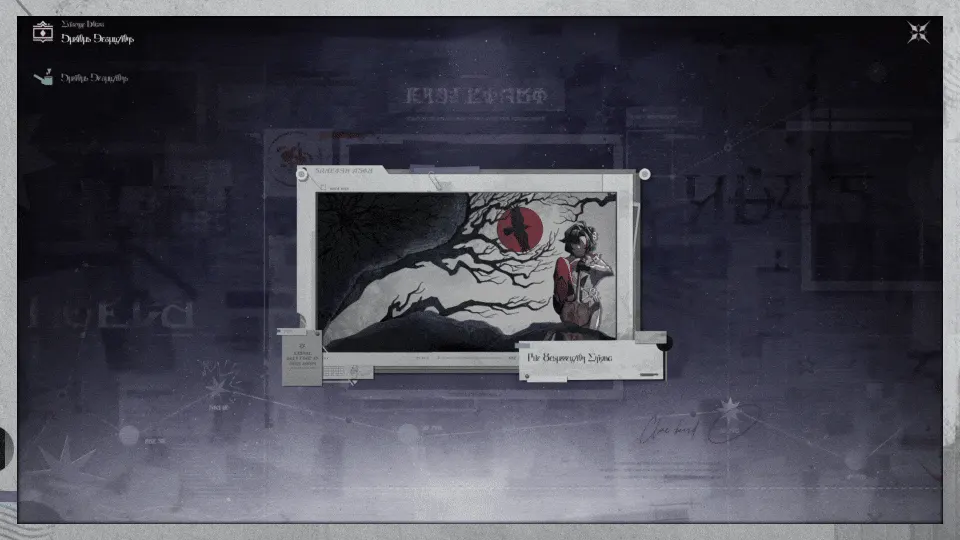
Every deduction can lead the case toward a different ending. Official still from the Curious Deductions Edition article, © Elementa Games.
The four field tools
| Tool | What it does |
|---|---|
| Eye of Insight | Scans NPCs for hidden traits — who is lying, who is marked, who does not belong |
| Crime Scene Investigation | Rotates 3D objects, including their backs and undersides; the scene is a puzzle object, not a backdrop |
| Body Forensics | Reads the deceased for cause, timing, and condition clues |
| Gathering Intel | Eavesdrops and reads documents; gossip and paperwork are clue sources like any other |
Tool close-ups were not published as official stills before launch; the behavior table is compiled from beta coverage and gets re-checked in the launch client.
The Evidence Board
The board is drag-and-drop deduction: move a clue onto a hypothesis slot and the case either locks it in or hands it back. A wrong clue usually bounces with no penalty — so the correct strategy is to try everything. The board is also where branching lives: the same clues can support more than one reading of the case, and the reading you lock determines where the story goes.
Curious Deductions: cases with endings
Curious Deductions are standalone cases with more than one ending, run outside the main story. Elementa has said only one ending is the truth; reaching it unlocks a collectible and an achievement.

The Resurrection Mystery — a Curious Case unfolds after a scholar’s death. Official still from the Curious Deductions Edition article, © Elementa Games.
Restart Deduction clears the Evidence Board so you can pursue another ending from the same clues.
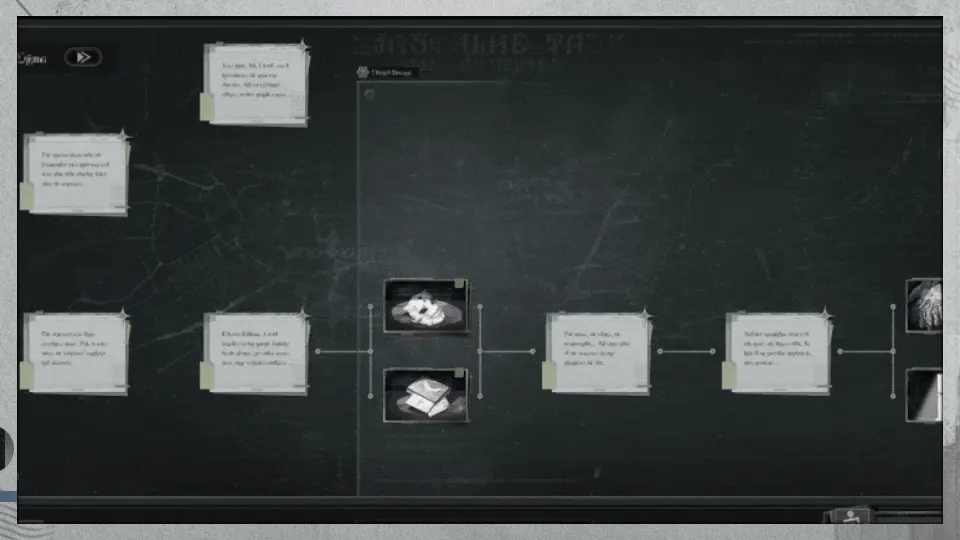
Restart Deduction clears the Evidence Board and lets you try another ending. Official still from the Curious Deductions Edition article, © Elementa Games.
One beta-observed note: community guides report that Restart Deduction can pay extra Reactor Crystals through an achievement. Treat that as CBT2-observed until the launch client confirms it.
Tips that survive every case
- Interrogate everyone twice. Once before the board is complete and once after — new locks open new lines.
- Read everything the tool highlights. Gathering Intel texts are written like case files because they are case files.
- Do not fear the wrong answer. With no penalty for a bounced deduction, the only losing move is not experimenting.
- Pair investigation days with city days. Clue hunts and City Affairs minigames both spend Free Time — plan them together in the daily routine.
Last verified November 14, 2026, against the official Curious Deductions Edition article and Dichotomy beta coverage. Launch-client changes land in News first.